NFL Betting: American Football Odds and Point Spreads
 Available in US
The National Football League generates more betting action than any other sports league in America, and it is not particularly close. Every fall, millions of bettors descend upon sportsbooks with dreams of turning their football knowledge into profit. Some succeed. Most do not. The difference often comes down to understanding not just the game itself, but the mechanics of wagering on it.
This guide covers everything you need to know about NFL betting in 2026, from the fundamental bet types that form the foundation of every wager to advanced strategies that separate recreational bettors from those who actually turn a profit. Whether you placed your first bet last Sunday or you have been handicapping games since before online sportsbooks existed, this resource offers something valuable. We will walk through spreads, moneylines, totals, parlays, props, and futures. We will break down how to read odds, manage your bankroll, and identify value where others miss it.
NFL betting operates legally in most states now, a dramatic shift from just a decade ago. The regulated market has brought transparency, consumer protections, and competition among sportsbooks that benefits bettors through better odds and promotions. However, legal access also means more people are betting, and sportsbooks have grown increasingly sophisticated at setting lines. Beating the market requires more than gut feelings and team loyalty.
The goal here is not to sell you on any particular sportsbook or promise guaranteed wins. That would be dishonest. Instead, this guide aims to make you a more informed bettor, someone who understands why lines move, when certain bets offer value, and how to avoid the common traps that drain bankrolls. Let us get started.
NFL Betting Odds, Lines and Point Spreads
How NFL Betting Works
Every NFL wager flows through a sportsbook, whether that is a physical location in Las Vegas or a mobile app on your phone. The sportsbook’s job is straightforward but crucial: set lines that attract betting action on both sides of a proposition, collect a small fee on losing bets, and turn a profit regardless of the outcome. That fee, commonly called the vig or juice, is built into the odds. When you see -110 next to a spread bet, that means you risk $110 to win $100, with the sportsbook keeping the $10 difference from losing bets.
Sportsbooks employ teams of oddsmakers who set opening lines based on power ratings, statistical models, injury reports, and historical data. Once lines go public, the market takes over. Sharp bettors, those with proven track records of winning, move lines with their action. If money floods in on one side, books adjust to balance their exposure or accept the liability if they believe the market is wrong. This constant adjustment means the lines you see Tuesday morning often differ significantly from the numbers available at kickoff Sunday.
Understanding this dynamic matters because timing affects value. A line that offers positive expected value on Wednesday might be a losing proposition by Sunday after sharp action moves it. Conversely, public money sometimes pushes lines in ways that create opportunities for those willing to go against popular opinion. The key is recognizing that odds are not predictions carved in stone but fluid markets reflecting collective opinion and action.
The Three Core NFL Bet Types
Three bet types form the foundation of NFL wagering. Everything else builds upon these concepts, so understanding them thoroughly pays dividends.
Point Spread Betting
The point spread exists to level the playing field between teams of unequal ability. When the Buffalo Bills face the New England Patriots, the teams rarely match up evenly. Spreads address this by requiring the favorite to win by more than a specified margin.
If Buffalo is listed at -7 against New England, the Bills must win by more than seven points for a spread bet on them to pay out. A Bills victory of 24-20 would not cover the spread because the margin is only four points. Meanwhile, a bet on New England +7 wins if the Patriots lose by fewer than seven points or win outright. If the final margin lands exactly on seven, the bet pushes, meaning you get your stake returned without any profit.
Key numbers in NFL betting refer to the most common margins of victory. Three and seven dominate because field goals score three points and touchdowns with an extra point score seven. Games decided by exactly three points occur roughly 15 percent of the time, while seven-point margins happen about 9 percent of the time. Spreads set at these numbers, or near them, require extra consideration because pushing is more likely, and buying or selling half points across these thresholds carries significant value.
Moneyline Betting
Moneyline bets strip away the spread entirely. You simply pick which team wins the game. The catch is that payouts adjust based on each team’s perceived chances.
Favorites are listed with negative numbers indicating how much you must risk to win $100. A -200 moneyline means you bet $200 to win $100 in profit. Underdogs carry positive numbers showing your profit on a $100 stake. A +180 underdog returns $180 profit on a $100 bet if they pull off the upset.
Moneyline betting appeals to bettors who like a specific team but worry about their ability to cover a large spread. If you believe the Kansas City Chiefs will beat the Jacksonville Jaguars but feel nervous about them covering -10.5, the moneyline offers a path to profit with less margin for error. The tradeoff is accepting reduced payout odds on favorites or needing a genuine upset when backing underdogs.
Totals Betting
Totals, also called over/under bets, focus on combined scoring rather than which team wins. Oddsmakers set a number representing the expected total points scored by both teams. Bettors wager on whether the actual combined score will exceed or fall short of that figure.
A game with a total set at 47.5 requires you to predict whether the teams will combine for 48 or more points (over) or 47 or fewer points (under). Weather, injuries to key offensive players, defensive matchups, and pace of play all influence totals. A rainy December game between run-heavy teams in Buffalo typically sees totals in the low 40s, while a climate-controlled dome matchup featuring high-powered offenses might push into the mid-50s.
Totals betting offers a way to engage with games without picking sides. You might have no opinion on whether the Lions or Vikings win their divisional matchup but feel confident their offenses will combine for over 50 points based on their respective defensive weaknesses. This flexibility makes totals a favorite market for bettors who prefer analyzing matchups over picking outright winners.
Advanced NFL Bet Types
Once you understand spreads, moneylines, and totals, a broader world of NFL betting options opens up. These advanced bet types offer higher potential payouts, more creative wagering opportunities, and, if approached carelessly, faster paths to losing money.
Parlay Betting
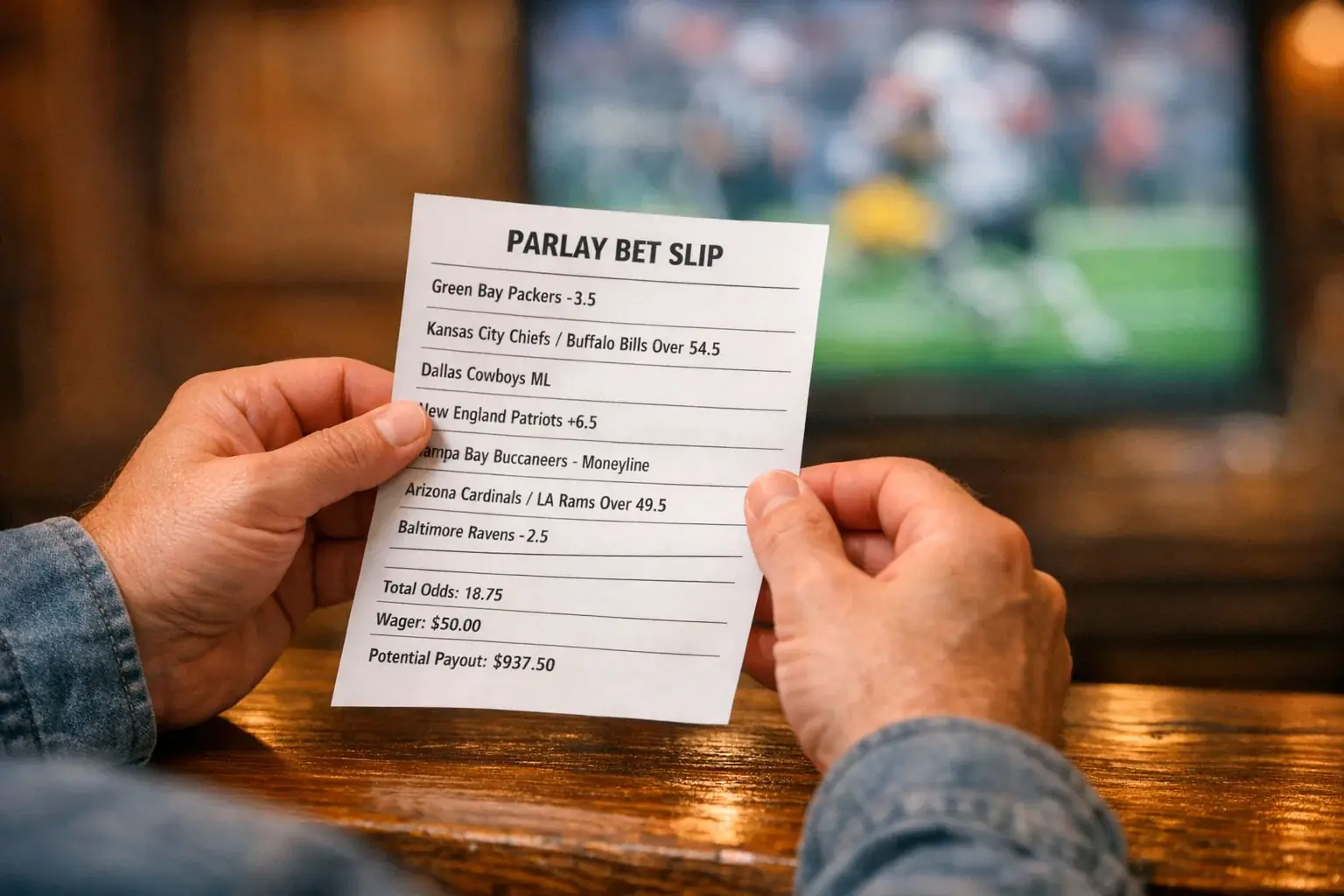
A parlay combines multiple individual bets into a single wager. All selections must win for the parlay to pay out, but the odds multiply together, creating potentially massive returns from modest stakes.
A two-team parlay at standard -110 odds on each leg pays roughly 2.6-to-1. Add a third team and the payout jumps to approximately 6-to-1. Four teams return around 12-to-1. The math sounds appealing until you consider that each added leg decreases your probability of winning exponentially. That three-team parlay at 6-to-1 actually offers worse expected value than three individual straight bets because the multiplicative nature of risk outpaces the reward.
Sportsbooks love parlays because the built-in vig compounds with each leg. The theoretical hold percentage on a parlay significantly exceeds that of straight bets. Does this mean you should never play parlays? Not necessarily. Parlays make sense in specific situations: when you have strong opinions on multiple games and want leveraged exposure, when correlations exist between legs that the book has not fully accounted for, or simply when you want entertainment value from a small stake. The key is understanding you are paying a premium for that combined payout and sizing your bets accordingly.
Common parlay mistakes include adding too many legs, treating them as primary betting strategy rather than occasional entertainment, and mixing confident plays with marginal ones just to boost the payout. If you genuinely believe in only two of your three parlay legs, you are better served making those as straight bets.
Cross 3 and 7, or don’t bother
Teaser Betting
Teasers modify point spreads in your favor across multiple games in exchange for reduced payouts. A standard six-point teaser moves every spread by six points toward your side. That -7 favorite becomes -1, and that +3 underdog becomes +9.
The appeal is obvious: easier paths to winning each leg. The cost comes in dramatically reduced payouts. A two-team, six-point teaser at most books pays around -110, meaning you are essentially betting at even money for moved lines. The math only works in specific situations.
Wong teasers, named after gambling author Stanford Wong, represent the most profitable teaser strategy. The concept focuses on crossing key numbers of 3 and 7. When you tease a -7.5 favorite through 7 and 3 to -1.5, or tease a +1.5 underdog through 3 and 7 to +7.5, you capture significant probability gains. Games decided by exactly 3 points or exactly 7 points represent substantial chunks of NFL outcomes, and teasers that cross both numbers offer positive expected value when priced at -110.
The trap is playing teasers that do not cross key numbers effectively. Teasing a -14 favorite to -8 feels good until you realize you have not crossed a single key number with significant impact. That six-point move bought you almost nothing in probability terms while still requiring a second winning leg.
Same Game Parlays
Same game parlays, commonly abbreviated as SGPs, allow you to combine multiple bets from a single game. Traditional parlay rules assumed independent events, but SGPs acknowledge that outcomes within one game often correlate.
Consider betting both the Kansas City Chiefs moneyline and Patrick Mahomes over 275.5 passing yards. These are not independent events. If the Chiefs win, there is a reasonable chance Mahomes threw for significant yardage to get them there. Sportsbooks adjust SGP odds to account for these correlations, often making the combined payout less favorable than a traditional parlay would suggest.
Building effective SGPs requires understanding which correlations books might undervalue. A game script play, for instance, combines a spread bet with a total. If you believe the Dolphins will win comfortably against the Jets, the game flow likely features Miami with a lead, meaning the Jets will pass more in catch-up mode and the clock will stop more frequently. This scenario could support both a Dolphins spread cover and a game total over, though the correlation varies by specific numbers involved.
SGPs carry significant vig, often more than traditional parlays. Treat them as entertainment or use them surgically when you identify correlations the book has mispriced. Building random SGPs based on gut feelings is a reliable path to long-term losses.
NFL Prop Bets
Proposition bets, or props, wager on specific occurrences within a game rather than the overall outcome. The variety is enormous, particularly during high-profile games and the Super Bowl.
Player props focus on individual statistical achievements. Will Derrick Henry rush for over 89.5 yards? Will Justin Jefferson record over 6.5 receptions? Will Jared Goff throw an interception? Each prop offers its own set of odds based on historical performance, matchup analysis, and projected game flow. Player props have become increasingly popular because they allow betting on specific player performances you might have strong opinions about regardless of game outcome.
Team props shift focus to collective achievements. Which team scores first? Will a team score in every quarter? Will there be a defensive touchdown? These props often appeal to bettors who see something specific in a matchup but struggle to translate that insight into a spread or total position.
Game props cover broader occurrences. Will the game go to overtime? Will there be a safety? Will the first score be a touchdown or field goal? Novelty props, especially prominent during the Super Bowl, extend to entertainment elements like coin toss results, anthem length, and halftime show details. These carry heavy vig and exist primarily for entertainment.
NFL Futures Betting
Futures bets wager on outcomes determined at season’s end rather than in individual games. Super Bowl winner, conference champions, division winners, season win totals, and individual awards like MVP all fall under the futures umbrella.
The primary advantage of futures betting is obtaining value before markets fully form. A team’s Super Bowl odds in March might sit at +2500, but after a strong draft and successful training camp, those same odds could compress to +1000 by September. Early bettors who identified the team’s potential captured significant value.
The disadvantage is time. Your money sits locked in that bet for months, unable to be deployed elsewhere. Injuries, suspensions, and unforeseen circumstances can destroy a futures bet long before the season concludes. Some sportsbooks offer cash-out options that allow you to take a reduced payout based on current odds, providing partial liquidity, but you sacrifice value for that flexibility.
Timing matters enormously in futures betting. Conference and division winner odds shift throughout the season based on performance. Buying low on teams after early-season struggles or selling high through hedging after strong starts can maximize expected value beyond simply placing a bet and waiting.
How to Read NFL Betting Odds

American Odds Format
American odds express payouts relative to a $100 baseline. This format dominates sportsbooks operating in the United States, so understanding it is essential.
Positive odds indicate how much profit you would earn on a $100 bet. A +180 underdog returns $180 profit plus your original $100 stake if successful. The higher the positive number, the less likely oddsmakers believe that outcome is.
Negative odds indicate how much you must risk to win $100 in profit. A -150 favorite requires you to bet $150 to win $100. The more negative the number, the heavier the favorite. A -500 favorite requires a $500 bet to win $100, reflecting a high implied probability of success.
Converting to implied probability helps assess whether odds offer value. For positive odds, divide 100 by the odds plus 100, then multiply by 100 to get a percentage. A +180 underdog has an implied probability of 100 divided by 280, which equals 35.7 percent. For negative odds, divide the absolute value of the odds by that number plus 100. A -150 favorite implies 150 divided by 250, equaling 60 percent.
Reading the Betting Board
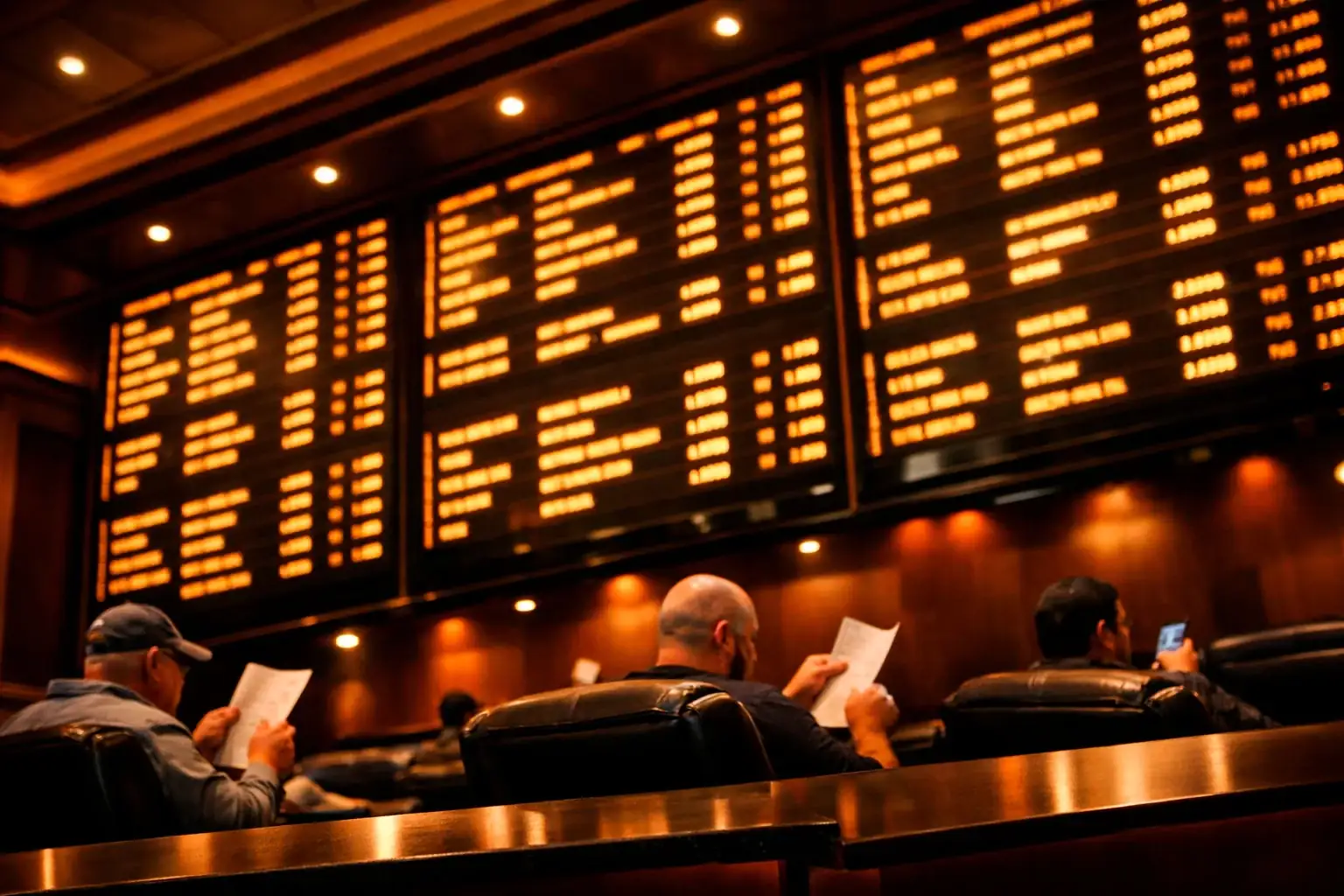
Modern sportsbook displays present information in standardized formats, though layouts vary slightly between operators. The betting board typically shows teams, spreads, totals, and moneylines in organized columns.
Spread columns display the point handicap and associated odds. Seeing Buffalo -7 (-110) means the Bills are seven-point favorites with standard juice. Line movement appears when comparing current numbers to opening or earlier lines. A spread that opened at -6.5 and now sits at -7.5 indicates money or sharp action on Buffalo.
Moneyline columns show the odds to win outright without any spread considerations. These numbers change more dramatically than spreads because they directly reflect probability adjustments without the buffer of points.
Totals appear either between the two teams or in a separate column, showing the over/under number with associated odds for each side. Movement in totals often reflects injury news, weather forecasts, or sharp action identifying value.
Finding Value in Odds
Value exists when the true probability of an outcome exceeds the implied probability from the odds. If you believe a team has a 40 percent chance to win but sportsbooks are offering +200 (33.3 percent implied), you have identified positive expected value.
Line shopping across multiple sportsbooks amplifies value. One book might offer a team at -3 (-110) while another has them at -2.5 (-115). The half-point difference at a key number like 3 could outweigh the slight juice increase. Maintaining accounts at multiple legal sportsbooks allows you to consistently find the best available numbers.
Closing line value, or CLV, measures whether your bets would have beaten the closing number. If you bet a team at -3 and the line closes at -4.5, you captured value regardless of whether that specific bet won. Sharp bettors who consistently beat closing lines demonstrate genuine edge, while those who regularly find themselves on the wrong side of line movement are likely contributing to sportsbook profits over time.
NFL Betting Strategies That Work
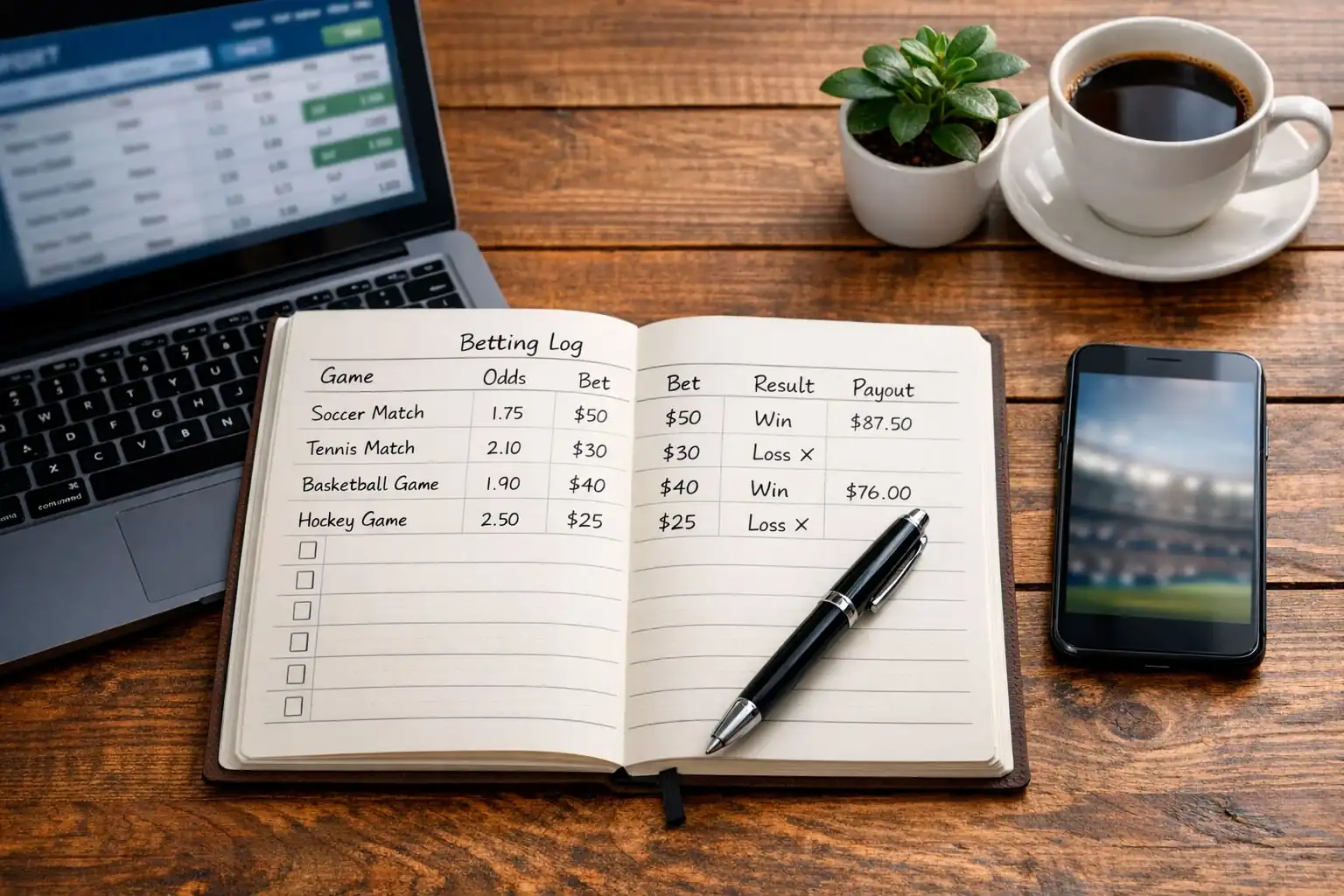
Understanding bet types and odds is necessary but not sufficient for profitable NFL betting. The difference between recreational bettors who fund sportsbook operations and sharp bettors who extract value lies in disciplined strategy application.
Bankroll Management
Every successful bettor starts with money management. Without a structured approach to bankroll allocation, even a bettor with genuine edge will eventually go broke during an inevitable losing streak.
Your bankroll is the total amount of money you have set aside exclusively for betting. This should be money you can afford to lose entirely without affecting your life, separate from rent, bills, savings, and other financial obligations. Once established, this number becomes your operating capital.
Standard unit sizing recommends betting 1-2 percent of your bankroll on any single wager. If you have a $5,000 bankroll, one unit equals $50-100. This sizing provides cushion against variance while allowing meaningful gains during winning periods. Some bettors vary unit sizes based on confidence levels, perhaps betting 1 unit on standard plays and 2 units on highest-confidence situations, but exceeding 3 percent on any single bet introduces dangerous risk of ruin.
Chasing losses destroys more bankrolls than bad handicapping. After a losing day or week, the temptation to increase bet sizes to recover quickly is powerful and destructive. The math remains the same regardless of recent results. Increasing stakes after losses amplifies variance precisely when your bankroll can least afford it. Disciplined bettors maintain consistent unit sizes through both winning and losing streaks, understanding that short-term fluctuations even out over sufficient sample sizes.
Line Shopping
Maintaining accounts at multiple legal sportsbooks provides one of the simplest edges available to bettors. Lines vary between operators, and consistently taking the best available number accumulates meaningful value over time.
Imagine betting 100 games per season. If even 10 percent of those involve half-point differences that affect outcomes, better line shopping converts several losses or pushes into wins. At standard betting volumes, this edge alone can be the difference between losing and breaking even, or between breaking even and modest profit.
Key numbers deserve particular attention when line shopping. A spread of -3 versus -2.5 is not a trivial half-point difference. Approximately 15 percent of NFL games land exactly on three points. That half-point crosses a margin that affects one in every six or seven games on average. Similarly, the gap between -7 and -6.5 captures another high-frequency margin. Paying extra juice to buy across these numbers often provides positive expected value even when the vig seems unfavorable.
Timing your bets adds another dimension to line shopping. Lines often move between opening and kickoff as money flows in and sharp action shapes the market. Some bettors prefer grabbing early value before sharps correct mispricings. Others wait for line movement to stabilize and bet against public money that pushes lines past their true value. Neither approach works universally; the key is understanding market dynamics and having reasons for your timing beyond convenience.
Research-Based Betting
Successful handicapping requires information advantages or analytical advantages. You either need to know something the market does not reflect, or you need to interpret publicly available information more accurately.
Injury reports represent the most accessible information edge. Official injury designations come out throughout the week, and savvy bettors track practice participation, snap counts, and beat reporter updates to gauge actual player status before official announcements move lines. A key offensive lineman downgrade from questionable to out can significantly impact a team’s ability to run the ball and protect the quarterback, affecting both spread and total projections.
Weather impacts scoring in predictable ways. Wind over 15-20 mph suppresses passing games and field goal accuracy. Rain and snow affect ball security and footing. Cold temperatures favor ground-and-pound attacks over aerial assaults. Dome teams traveling to cold outdoor environments late in the season face adjustment challenges. Totals markets react to weather, but sometimes not sufficiently, creating opportunities for bettors who dig into hourly forecasts rather than accepting general predictions.
Home field advantage has declined in recent years but still matters, worth approximately 1.5-2.5 points depending on venue. Some stadiums, like Seattle or Denver, consistently impact visiting teams more than others. Altitude, crowd noise, and travel distance all contribute. Division games reduce home field impact somewhat due to familiarity, while cross-country trips on short rest amplify it.
Rest and schedule spots matter more than casual bettors realize. Teams coming off bye weeks show measurable performance improvements. Teams playing Thursday after a physical Sunday game show declines. The dreaded East Coast team traveling to the West Coast for an early start faces both time zone disadvantage and circadian disruption. These factors are well-known, so they are partially priced into lines, but edges remain for bettors who quantify their impact more precisely than the market.
Fading the Public
Public betting percentages indicate where recreational money flows. The public tends to overvalue popular teams, recent performance, and offensive stars while underweighting defensive matchups, special teams, and situational factors. Contrarian strategies exploit these tendencies by betting against heavy public action.
When 80 percent of bets land on one side but the line barely moves or moves against the public, sharp money is likely on the other side. Sportsbooks balance their exposure, so if public money should be pushing a line in one direction but it moves the opposite way, respected bettors are taking the other side in sufficient volume to offset the recreational action.
Not every contrarian opportunity offers value. Sometimes the public is right, and favorites deserve the support they receive. The strategy works best when combined with line movement analysis and independent handicapping that confirms the contrarian position has merit beyond simply opposing popular opinion. Blindly fading the public performs better than blindly following the public, but neither approach substitutes for genuine analysis.
Live Betting Tactics
In-game betting has exploded in popularity as technology enables real-time odds adjustments. Live markets offer unique opportunities for bettors who read games well and act decisively.
The primary advantage of live betting is reacting to developments the pregame line could not anticipate. An early turnover that puts a team behind creates value if you believe they will recover. A key injury changes the complexion of a game midstream. Weather conditions worsen or improve. Live betting allows you to incorporate this information instantly.
However, live betting also presents significant risks. Lines move quickly, and the vig is often higher than pregame markets. Emotional betting increases during live action as momentum shifts create panic or overconfidence. The speed of live betting encourages impulsive decisions without proper reflection.
Successful live bettors typically specialize. Some focus exclusively on second halves, allowing the first half to reveal game flow before committing. Others target specific situations like favorites falling behind early, knowing that pregame favorites who trail at halftime still win outright at historically profitable rates. The key is having a systematic approach rather than randomly chasing action based on what you are watching.
NFL Betting by Season Phase
The NFL season unfolds in distinct phases, each presenting unique betting considerations. Strategies that work in September may fail in January, and approaches optimized for regular season games often require adjustment for playoff intensity.
Preseason Betting
Preseason games exist for roster evaluation, not winning. Starters play limited snaps. Game planning focuses on scheme installation rather than opponent-specific attack. Outcomes depend heavily on backup and fringe roster players whose abilities are difficult to assess.
Betting preseason requires accepting extreme variance and limited information. Historical data means little when the players involved differ dramatically from those who will take the field in regular season. Sharp bettors often avoid preseason entirely or focus narrowly on specific team tendencies, like which organizations play starters longer or prioritize winning exhibition games for momentum purposes.
If you choose to bet preseason, manage your unit sizes conservatively. The standard variance management that works during regular season is insufficient when outcomes hinge on third-string quarterback play and which coaching staff cares more about a meaningless result.
Regular Season Strategy
The 18-week regular season presents the most predictable betting environment. Sample sizes accumulate, trends emerge, and markets become increasingly efficient as information proliferates.
Early season games, particularly Weeks 1-4, offer opportunity and risk in equal measure. Oddsmakers set lines based on projections rather than demonstrated performance. Last year’s team may not reflect this year’s reality. Offseason acquisitions integrate unpredictably. New coaching staffs implement schemes with uncertain success. Bettors who accurately project these transitions can find value that evaporates once the market observes actual results.
Mid-season represents peak market efficiency. By Week 8, sportsbooks and sharps alike have enough data to generate accurate power ratings. Public perception aligns more closely with reality. Value becomes harder to find, and profitable betting requires finer margins and more sophisticated analysis.
Late season introduces new variables. Playoff positioning creates motivation disparities. Teams clinching early may rest starters or show less effort. Teams eliminated from contention may play freely without pressure or check out mentally. Weather becomes a factor in northern and outdoor venues. These dynamics create market inefficiencies for bettors who track situational factors carefully.
NFL Playoffs Betting
Playoff intensity differs qualitatively from regular season play. Teams prepare for two weeks rather than one. Game plans reflect deeper study of specific opponents. Execution tightens, and variance decreases as better teams consistently advance.
Defense and special teams matter more in playoffs. High-stakes pressure exposes offensive limitations while rewarding defensive discipline. Field position becomes more valuable when scoring opportunities are scarce. Totals tend to contract appropriately, but bettors who understand which matchups will play lower than expected can find value on unders.
Historical underdog performance in playoffs provides interesting context. Since the current 14-team playoff format began in 2020, underdogs have covered spreads at slightly above the break-even rate. Road underdogs in particular have shown resilience, winning outright more often than regular season patterns would suggest. This does not mean blindly betting playoff underdogs offers edge, but it does suggest the market may slightly undervalue them.
Sharp money patterns shift during playoffs. The two-week preparation window gives sophisticated bettors more time to analyze matchups, and line movement late in the cycle often reflects sharp action more reliably than during regular season when lines move quickly with less deliberation.
Super Bowl Betting
The Super Bowl stands alone as a betting event. Markets open weeks in advance. Hundreds of prop bets become available. Media coverage generates massive public interest and accompanying recreational betting volume.
Market efficiency challenges intensify for the Super Bowl. So much analysis circulates that genuinely valuable insights become rare. The line is picked apart by sharp bettors, public money, and media analysts alike. By kickoff, the spread and total typically reflect consensus value with limited opportunities for edge.
Prop bets offer the most potential value during the Super Bowl precisely because of their volume. Sportsbooks cannot devote equal attention to pricing 400 different props, so inefficiencies persist in less prominent markets. Player props, particularly for non-star players, often show softer lines than the main spread and total. The challenge is identifying which props offer genuine value versus which simply have wider variance.
Timing matters significantly for Super Bowl betting. Lines move substantially during the two-week window between conference championships and the game itself. Early bettors can capture value before the market settles, while late bettors benefit from maximum information but face picked-over lines.
Common NFL Betting Mistakes to Avoid
The most reliable way to improve your betting results is eliminating common errors that drain bankrolls. Technical knowledge means nothing if undisciplined behavior undermines your edge.
Betting with emotional bias tops the list of destructive habits. Wagering on your favorite team because you want them to win rather than because you have identified value is a donation to sportsbooks. Fans overestimate their team’s abilities, rationalize unfavorable matchups, and ignore warning signs that neutral analysis would reveal. If you cannot honestly assess whether your handicapping on a particular game is objective, skip it entirely.
Chasing losses compounds the damage from inevitable losing streaks. The desire to get even today ignores the reality that today’s games have no connection to yesterday’s results. Each bet exists independently. Increasing stakes after losses accelerates variance precisely when your bankroll needs protection. Set daily, weekly, and monthly loss limits and respect them regardless of how strongly you believe the next bet will win.
Ignoring line movement leaves value on the table. When a line moves against you, you are betting at worse odds than earlier bettors received. Understanding why lines move, whether due to sharp action, injury news, or public money, helps you determine whether to bet, wait, or pass entirely. Blindly betting at whatever number you find at game time means accepting whatever the market leaves.
Overvaluing recent performance leads to buying high and selling low. Teams coming off blowout wins see inflated spreads the following week. Teams following embarrassing losses often present value because the market overreacts. Regression to the mean is a powerful force in NFL outcomes, and bettors who recognize this can profit from market overreaction.
Neglecting the fundamentals of bankroll management underlies most of these errors. Without disciplined unit sizing, even sound handicapping produces erratic results. Without loss limits, temporary setbacks become permanent damage. The unglamorous work of money management creates the foundation upon which successful betting careers are built.
Frequently Asked Questions
What is the easiest type of NFL bet for beginners?
Moneyline betting offers the simplest entry point. You pick which team wins the game without worrying about point spreads or combined scores. The outcome is binary and easy to understand. The tradeoff is that favorites require larger stakes for modest returns while underdogs demand actual upsets for payouts. For beginners, starting with moneyline bets on games with relatively balanced odds helps build understanding of how sportsbooks work before adding complexity. Once comfortable, expanding to spreads and totals provides more betting opportunities and often better value than moneylines on heavy favorites.
How do NFL point spreads and betting odds work?
Point spreads handicap games by requiring favorites to win by more than a specified margin. When you see Kansas City -6.5, the Chiefs must win by 7 or more points for a bet on them to cash. The opponent at +6.5 covers if they win outright or lose by 6 or fewer. Standard odds of -110 mean you risk $110 to win $100, with the extra $10 representing the sportsbook’s commission. When odds differ from -110, payouts adjust accordingly. Positive odds like +150 indicate underdog status, returning $150 profit on a $100 bet. Negative odds like -200 require larger stakes, with $200 risked to win $100 on a favorite.
What are the key factors to consider when betting on NFL games?
Injury status of key players significantly impacts outcomes. Check practice reports and beat reporter updates throughout the week, not just official designations. Weather affects scoring and should influence total bets, particularly wind and precipitation. Home field advantage still provides roughly 2 points of value, though this varies by venue. Rest disparities, especially Thursday games following Sunday games or cross-country travel, create edges. Line movement reveals where sharp money lands and whether public perception has pushed odds away from fair value. Finally, situational motivation, like playoff positioning implications or divisional rivalry intensity, influences effort and focus in ways statistics may not capture.
Conclusion
NFL betting rewards patience, discipline, and continuous learning. The concepts covered in this guide provide a comprehensive foundation: understanding core bet types, recognizing advanced opportunities, reading odds accurately, applying proven strategies, adapting to seasonal phases, and avoiding common pitfalls.
Profitable betting is a marathon, not a sprint. The sharps who consistently beat sportsbooks did not arrive there overnight. They accumulated knowledge, refined their processes, learned from mistakes, and maintained discipline through inevitable variance. The recreational bettors who fund sportsbook operations made the opposite choices, chasing quick wins, betting emotionally, and ignoring the mathematical realities of wagering.
Start with manageable stakes and clear goals. Track your bets meticulously to identify what works and what does not. Shop for the best lines. Respect your bankroll limits. Stay curious about new strategies while remaining skeptical of anyone promising guaranteed wins.
The NFL season offers hundreds of betting opportunities annually. You do not need to bet them all. Selectivity, waiting for genuine value rather than forcing action, separates sustainable bettors from those who eventually quit after donating their bankrolls to the house. Good luck, and bet responsibly.
Published by the nfl Betting team.